Guide
Grid connection and substation finance for EV charging hubs
On depots and rapid charging hubs, the connection is often the largest single cost and the longest lead item. This guide explains what a hub connection involves, which parts can be financed, and how to structure funding around a DNO timetable you do not control.
Written by Tom, Power and Energy Finance Specialist · Updated October 2026
The short version
- Larger hubs often need a new or upgraded substation, not just more chargers.
- Connection works split into contestable work, which an accredited contractor can deliver, and non-contestable work the DNO must do.
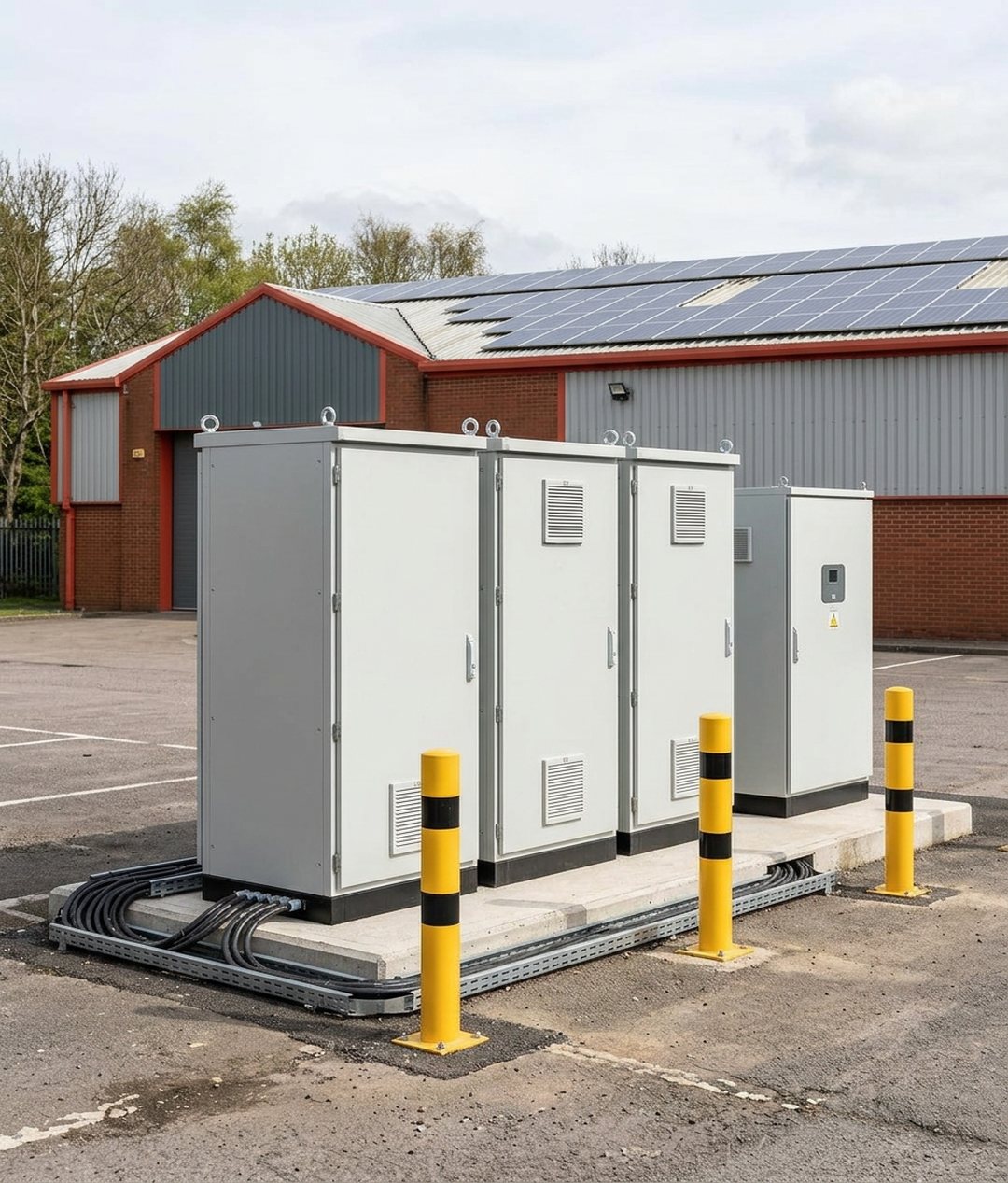
- Equipment the site will own, such as a private transformer, switchgear and cabling, is usually the easiest part to fund.
- Charges paid to the DNO buy a connection rather than an asset, so funder appetite varies and they are often handled as part of a wider project facility.
- Staged drawdowns stop you paying interest on money that is not yet needed while waiting for the connection date.
What a hub connection involves
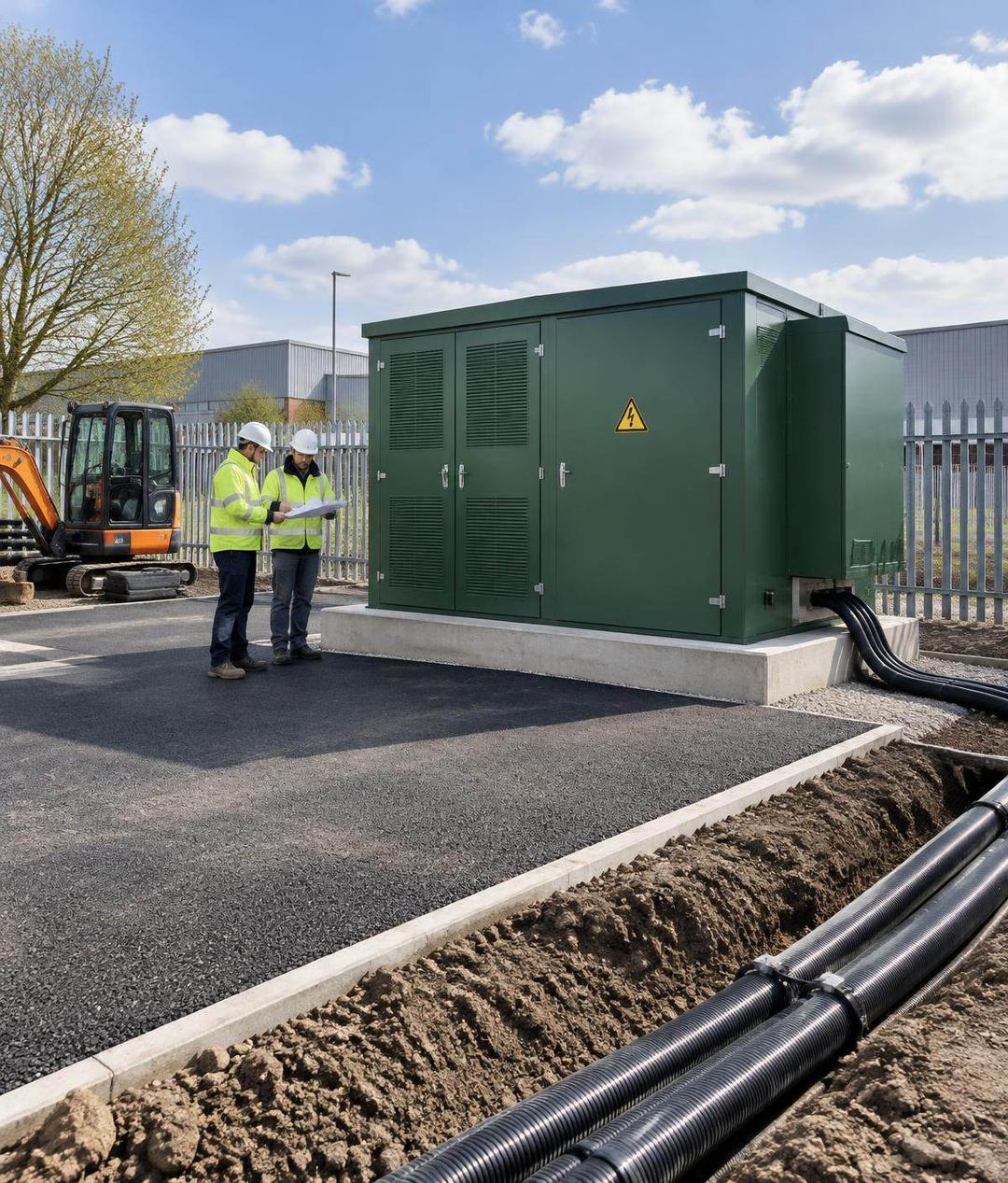
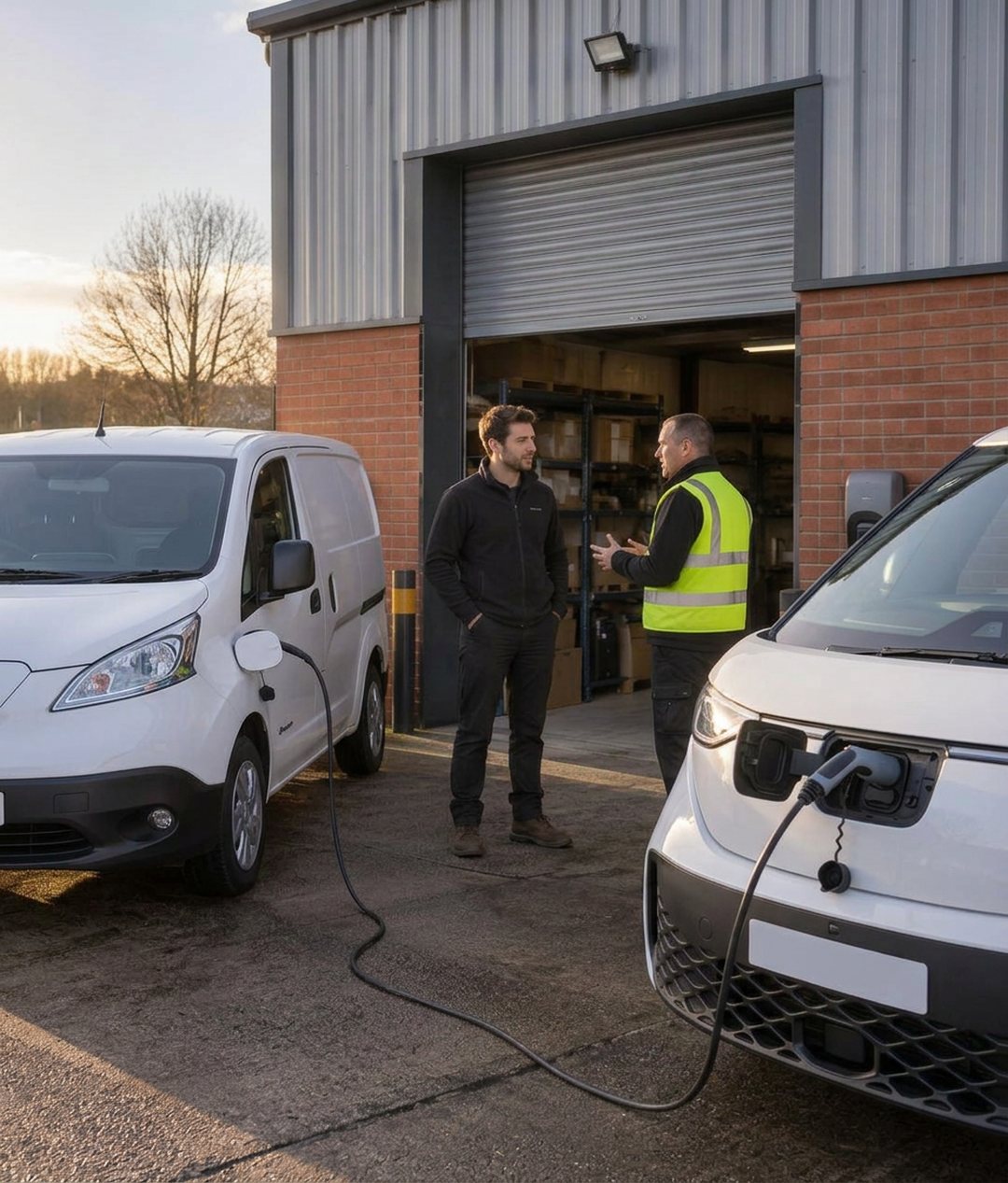
A handful of 22 kW chargers can often run from an existing supply. A depot charging dozens of vans or HGVs overnight, or a hub with several 150 kW units, usually cannot. The site then needs more capacity from the DNO, frequently delivered through a new high voltage connection and a dedicated substation.
The DNO will issue a connection offer setting out the works, the cost and the expected date. On many networks the date is the harder problem, because reinforcement upstream can push it out by months or years. Our UK DNO connections guide covers that process in detail.
Contestable and non-contestable works
In Great Britain, part of a new connection can usually be delivered by an Independent Connection Provider accredited under the National Electricity Registration Scheme, rather than by the DNO. This is the contestable work, for example laying cable and building the substation. The non-contestable work, such as the final connection to the live network and some design approvals, must be done by the DNO.
Using an independent provider can improve the programme and the price on some schemes. It also changes who you are paying, which matters for how the works are funded.
| Cost item | Who delivers | Funding position |
|---|---|---|
| Chargers and dispensers | Installer | Readily fundable as equipment |
| Private transformer and LV switchgear owned by the site | Installer or ICP | Usually fundable as equipment |
| Cabling, ducting and civils on site | Installer or ICP | Usually fundable within the installed scope |
| Contestable network assets later adopted by the DNO | ICP | Case by case, often within a project facility |
| Non-contestable DNO charges and reinforcement | DNO | Case by case, funder appetite varies |
Structuring funding around the connection date
The awkward part of hub funding is timing. The DNO usually wants payment in stages against the offer, the installer wants paying as work progresses, and none of the chargers earn anything until the site is energised. A single upfront loan means paying interest through that whole wait.
We structure hub projects with drawdowns tied to the actual payment milestones, and where possible keep site-owned equipment on standard asset finance with the connection costs handled in a wider project facility. Load management or on-site storage can sometimes reduce the capacity needed, which can shrink the connection works considerably.
Figures on this page are indicative ranges drawn from UK market pricing we see across quotes and funder appetite. They are illustrations, not quotations, and every project prices on its own scope, site and credit profile.
- Get a DNO budget estimate before committing to a charger design.
- Compare a DNO quote with an independent connection provider where the work is contestable.
- Map every payment milestone before agreeing the facility.
- Price load management or a battery as an alternative to the full upgrade.
Where this applies
Continue reading
- Pillar guideEV charging infrastructure for UK businesses: costs, grid capacity and funding
- GuideWorkplace Charging Scheme 2026: the £500 grant and how to fund the rest
- GuideEV charger installation cost in the UK, line by line
- GuideCharging-as-a-Service finance: how UK operators fund CaaS rollouts
FAQs
Common questions
The questions that come up most often on this subject.
Can I finance a substation for an EV charging depot?
Often, yes. A substation and transformer owned by the site can usually be funded as equipment. Works that are adopted by the DNO, and DNO charges, are assessed case by case and are often handled in a wider project facility.
What is contestable connection work?
Parts of a new connection that can be built by an accredited Independent Connection Provider instead of the DNO, such as cabling and substation construction. The final connection to the live network remains with the DNO.
How do I avoid paying interest while waiting for a grid connection?
Use staged drawdowns that release funds only when each payment falls due, rather than a single upfront loan.
Can load management avoid a substation upgrade?
On some sites. Where vehicles dwell overnight, load management or a battery can keep demand within existing capacity. It depends on the duty cycle, so it needs half hourly data and a proper assessment.