

EV Fleet Finance
Vehicles and the power behind them, funded as one project.
An electric fleet is not a vehicle purchase. It is a vehicle purchase plus a power project, and splitting the two across separate funders is where transitions stall.
Typical project size , £75,000 – £4,000,000
What usually gets in the way
- Vehicle finance is available. Depot power upgrades usually are not.
- Fleet managers get quoted for vans and discover the substation cost afterwards.
- Residual values on commercial EVs are still poorly understood by mainstream lenders.
Why businesses finance it
- Spread the transition across the vehicle lifecycle rather than one brutal capital year.
- Fund vehicles and charging together so the depot is ready on delivery day.
- Keep the fuel-versus-energy saving ahead of the monthly cost.
How GRID helps
Structured by people who read the load profile first.
We structure vehicles, chargers and electrical works under one coordinated quote.
We plan drawdowns around DNO timelines so nothing sits idle.
We phase funding across staged fleet rollouts.
Example projects
Real shapes, real structures.
Last-mile operator, 40 eLCVs
Vehicles plus 20 dual-socket chargers and a supply upgrade.
Utilities contractor, 18 vehicles
Mixed fleet phased over three drawdowns.
Regional haulier, 6 eHGVs
Funded alongside 350kW depot charging and on-site storage.
Other project types we fund
EV fleet finance: a project we funded
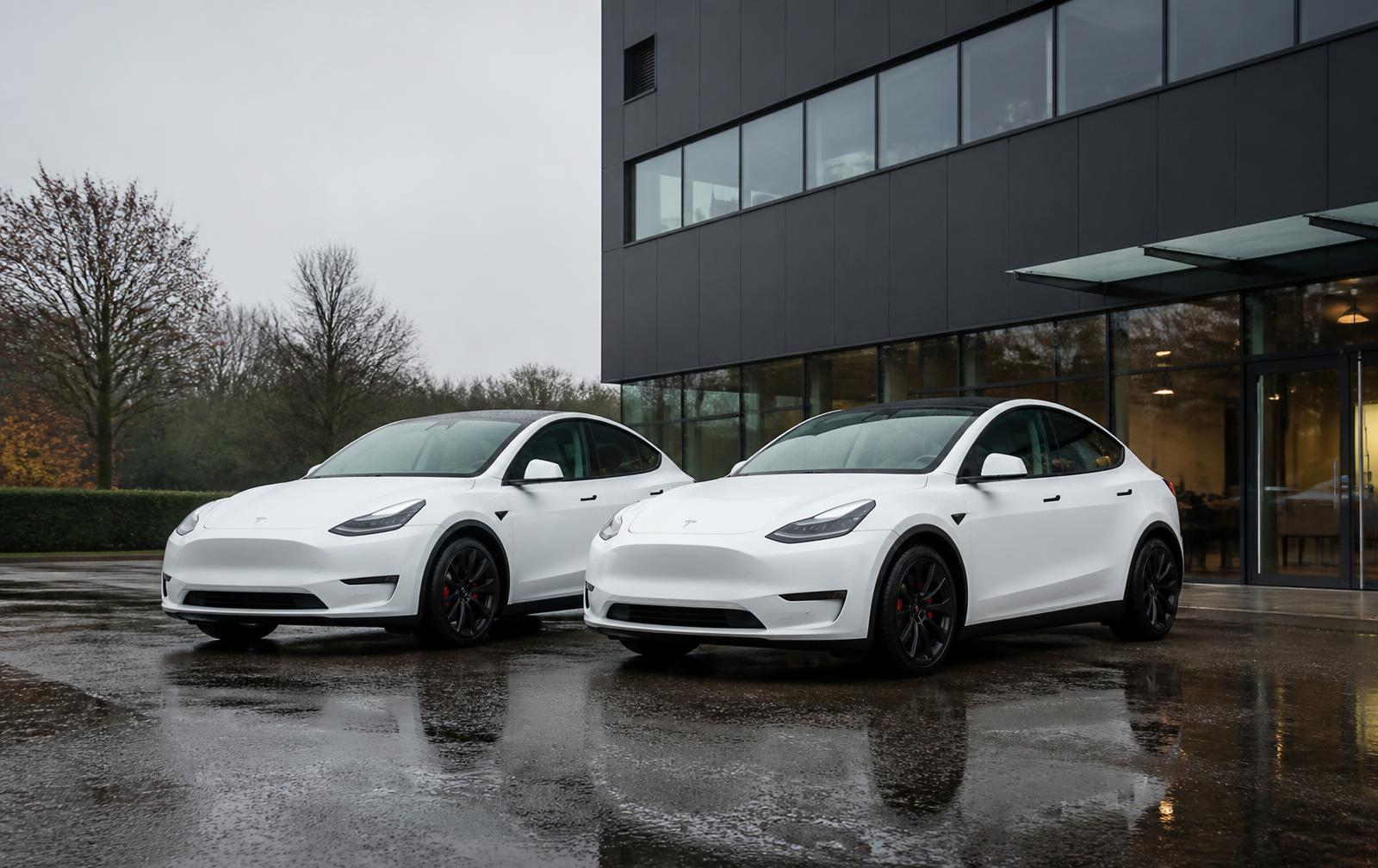
Two Tesla Model Y Performance, funded when the manufacturer said no
A recent fleet example: Tesla Model Y company cars funded for a director group.
FAQs
EV Fleet Finance: common questions
Practical answers on structure, cost and what funders look at. Call 01604 969123 if your question is not covered.
Can electric vans and trucks be financed with the depot charging?
Yes, and it is the sensible way to do it. Vehicles and charging infrastructure are two halves of the same project, so funding them together avoids the common problem of vehicles arriving before the depot can charge them.
What terms are typical on commercial EV finance?
Vehicle terms usually run from three to five years, while the depot infrastructure behind them is often funded over a longer period because it lasts longer. We coordinate the two so the overall monthly cost tracks the fuel and maintenance saving.
How are residual values handled on electric commercial vehicles?
Residual values on commercial EVs are still developing, and funders take a more conservative view than they do on diesel equivalents. That affects lease pricing, which is one reason ownership structures sometimes work out better on longer hold periods.
Can a fleet transition be funded in phases?
Yes. Phased rollouts are normal, and funding can be arranged across multiple drawdowns as vehicles and charging capacity are added rather than as one large commitment on day one.